
Frazer Town Mosque & Religious Contributions
How HSIS strengthened faith, community, and welfare through mosques, endowments, and international religious support.
Faith in Action, Humanity in Purpose
HSIS saw worship not only in prayer, but in the quiet, sustained work of building institutions that could uphold dignity, education, and compassion for generations.
Across mosques, orphanages, land endowments, and international relief, his giving followed a simple principle: strengthen faith, protect the vulnerable, and create self-sustaining avenues for community uplift
Archival reflection
“Religion, to him, meant responsibility – a duty to build for others what he had been blessed to receive.”
- Mosques as social anchors for prayer, learning, and community cohesion.
- Endowments and income-generating properties to sustain religious and welfare institutions.
- Support that crossed borders-from Mysore to Vietnam, Turkey, and Tripoli.
- Interfaith generosity through donations to temples, churches, and relief funds.
Frazer Town Mosque (1911)
A landmark mosque conceived not only as a house of worship but as a long-term community institution, architecturally prominent and financially resilient
Foundation Ceremony (1911)
Frazer Town, Bangalore
HSIS played a central role in laying the foundations of the mosque, bringing together community leaders, scholars, and civic figures in what contemporary accounts described as a “moment of shared devotion”.
Architectural & Social Impact
- Distinctive minarets and façade, designed to stand out along the new cityscape of Cantonment Bangalore.
- Spaces for Quranic classes and religious study, especially for younger members of the community.
- Informal hub for resolving community matters, charitable distributions, and announcements
Significance of the Mosque
- Key place of daily and Friday congregational prayers for the growing Muslim population of Frazer Town.
- Venue for sermons, religious instruction, and community guidance.
- A shared space that knit together traders, workers, and families who had recently settled in the area.
Long-Term Sustainability
- Endowed with attached shops and rental properties whose income supported mosque operations.
- Structured as waqf, protecting the assets for religious and charitable use in perpetuity.
- A model of “income-generating philanthropy” where care for worship was tied to financial prudence
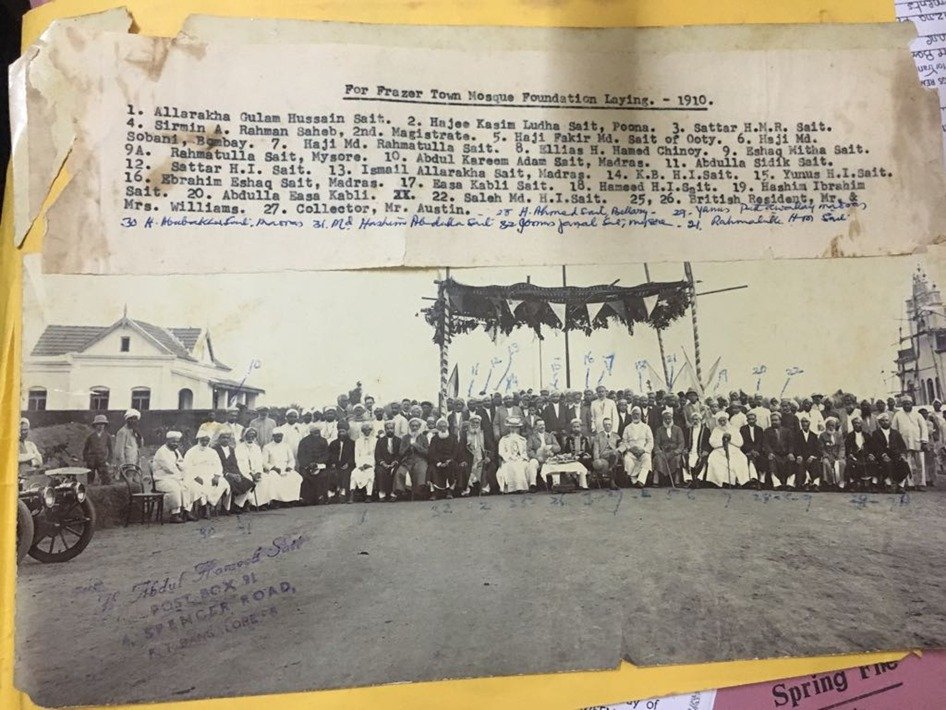
Foundation Laying of Frazer Town Mosque (1910)
This historic image from 1910 shows the grand foundation-laying ceremony of the Frazer Town Mosque, an institution closely associated with Hajee Sir Ismail Sait.
The typed list above the photo identifies prominent attendees, including respected Cutchi Memon leaders, magistrates, businessmen, and British officials.
This mosque would later become one of the most important religious landmarks in Bangalore’s Muslim community, reflecting HSIS’s commitment to spiritual upliftment and civic development.
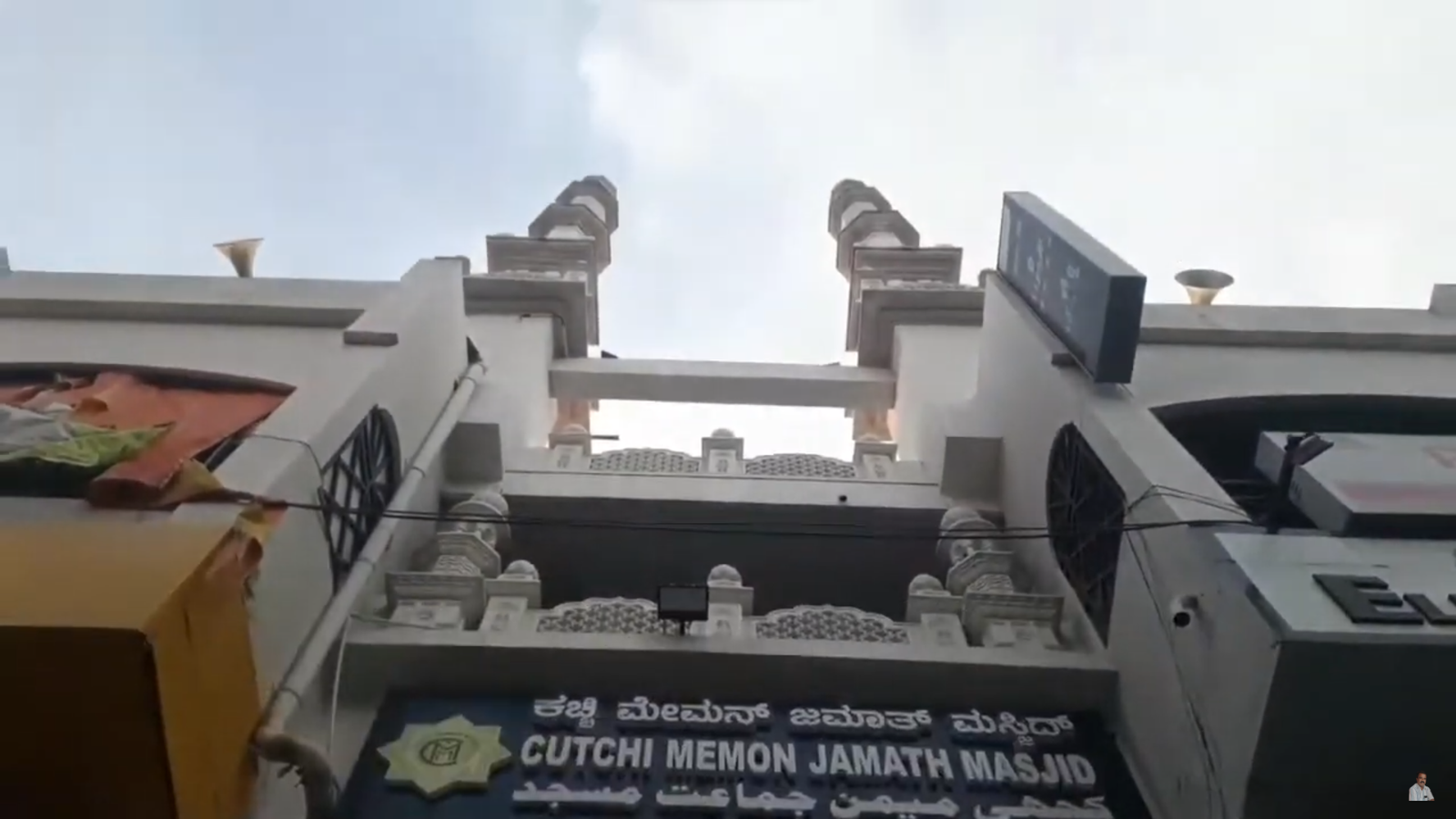
Cutchi Memon Masjid, Mysore
In Mysore, HSIS strengthened deep community ties by supporting the Cutchi Memon Masjid – a spiritual home, resting place, and enduring symbol of identity.
- Central place of worship for the Cutchi Memon community, anchoring their faith life in the city.
- Recognised burial place for respected members of the community, connecting generations.
- A living link between Mysore’s trading networks and its religious and civic institutions.
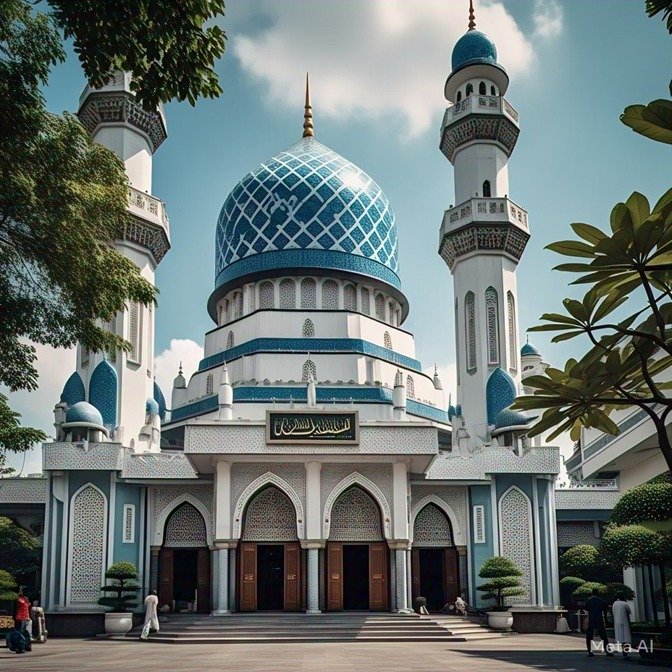
International Contribution Vietnam Mosque
Decades before international development became a formal field, HSIS contributed to buliding a mosque in Vietnam, extending his concern for Muslim communities beyond national borders.
Why this was extraordinary
- Demonstrated awareness of Muslim communities well beyond South Asia, at a time when travel and communication were limited.
- Showed willingness to support religious infrastructure where local resources alone were insufficient.
- Aligned with his broader pattern of giving: build institutions that could serve as lasting anchors for faith and community.
- Prefigured later models of transnational philanthropy, especially within the Muslim world
Orphanages, Waqf Land, and Community Welfare
HSIS linked worship to welfare, investing in children, land endowments, and institutions that would care for those at society’s margins
Orphanages
He supported orphanages that offered shelter, food, and basic education to children without family support
- Created safe environments closely linked to nearby mosques and schools.
- Encouraged vocational training so that care led to long-term independence
Land Endowments (Waqf)
Through waqf lands, HSIS ensured steady resources for religious and charitable causes, safeguarding them from personal or commercial claims
- Properties earmarked for mosque expenses, stipends, and social relief.
- A philosophy of using wealth as a trust, not a possession
Whitefield Mosque & Orphanage
In Whitefield, a mosque and orphanage were closely connected, embodying his belief that spiritual life must be accompanied by social responsibility
- Children grew up within earshot of the call to prayer, with access to both religious and secular learning.
- Sustained through endowments and rental Income, reducing dependence on episodic donations.
Donations to Temples & Churches
While deeply rooted in his own faith, HSIS extended generosity to institutions of other religions, recognising shared human needs above sectarian lines
A Philanthropist Beyond Boundaries
Hindu temples
Recorded gifts for temple repairs and festivals in recognition of their role in community life
Christian churches
Contributions towards church funds and relief drives organised by Christian missions
Interfaith initiatives
Support for causes where leaders of multiple faiths came together for education and relief
Contemporaries noted his “broad sympathy for humanity a conviction that the suffering of any neighbour, regardless of religion, deserved response
International Relief Funds
Long before global humanitarian campaigns became common, HSIS responded to appeals from distant regions facing hardship and conflict
Turkish Relief Fund
Contributions to relief efforts in Turkey signalled his solidarity with communities affected by war and political upheaval
Tripoli Relief Fund
Support for Tripoli reflected an awareness of struggles in North Africa and a desire to aid victims regardless of distance
Overseas Islamic Causes
Beyond specific campaigns, HSIS gave to general funds that aided overseas Islamic institutions and scholars in need
These contributions illustrate an early form of global consciousnessa sense that his religious duty extended to crises far beyond the subcontinent
Role in Community Leadership
HSIS did not limit himself to financial support; he also served as a custodian of community institutions, guiding them through periods of change
1923-1934
Provided leadership to the Cutchi Memon community in matters of welfare, dispute resolution, and representation before civic authorities
Early 1900s
Served as a key patron and advisor to religious teachers and trustees, helping to stabilise finances and governance.
Recalled by contemporaries
Remembered as someone to whom people turned in times of need, trusted to act fairly across community lines
In all these roles, HSIS embodied the idea of a “community custodian” one who held responsibility not only for assets, but for people